


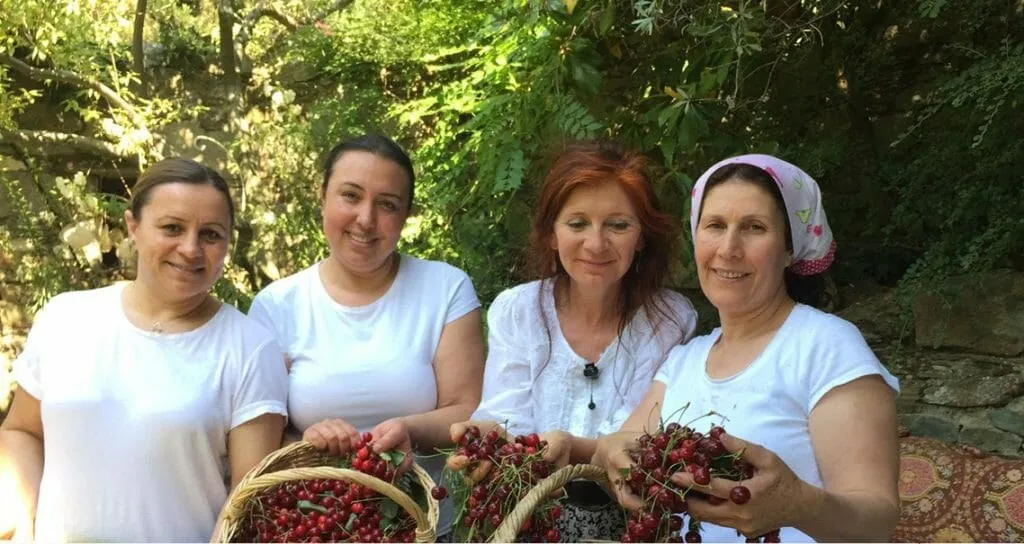
Don’t Be Surprised to Taste a Different Culture on Every Plate
In western Anatolia, food culture has taken on a character of its own. Shaped by Mediterranean cooking, the cuisine of western Anatolia is enriched by lush greens, fragrant herbs and golden olive oil that carries the aromas of the mountains and the countryside. Today, with their uniquely flavorful dishes, western Anatolian and immigrant cooking have blended together in the cuisine of Selçuk Ephesus. Shaped over the years by the different civilizations, religions and cultures of these lands, and further enriched by Cretan, Macedonian, Albanian and Greek cooking, Ephesus cuisine is a cuisine of healthy, delicious dishes.
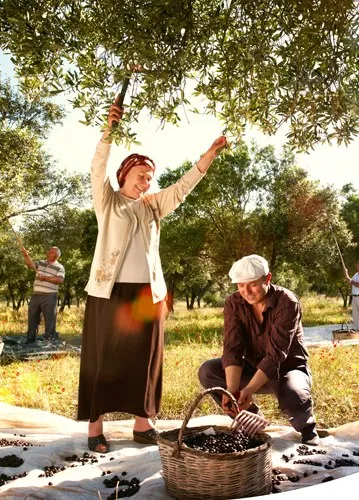
The fertile soil, where all kinds of herbs, vegetables and fruit grow in every season, spring or winter, along with seafood and the olive, nature’s gift to the people of the Aegean, and its juice, olive oil, are the leading players in Ephesus cuisine.
Delicious, wholesome and healing produce grown on fertile plains that see the sun 300 days a year is blended with love, skill and mastery in the kitchens of a happy town’s people.
The Birthplace of Çöp Şiş
Çöp şiş (small skewered meat) is today an important part of Anatolian food culture, above all in Ephesus Selçuk and the Aegean. This unique dish, which has come down to the present day, was born on Türkiye’s first railway line, between İzmir and Aydın, when railway workers threaded meat onto skewers made from reeds and cooked it. Born beside the tracks, it was carried along the line on grills hung around the neck, first to the workers and later to travelers on the trains, and so the çöp şiş culture spread across Anatolia.
İzmir, a member of the Good Food Cities of the World Network (DELICE)
İzmir is a member of DELICE, the Good Food Cities of the World Network, which brings together cities from different parts of the world. İzmir joined the network in 2015, becoming its 23rd city. DELICE offers a platform for communication and exchange on gastronomy between master chefs and cities, and its activities cover urban marketing, education and knowledge transfer, local produce, health and nutrition, and chef mastery.
İzmir joined the network to share its experience through its multicultural Aegean cuisine, distilled from thousands of years of history and bearing the traits of many different cultures.
When İzmir joined in 2015, the Good Food Cities of the World Network included Aarhus (Denmark), Barcelona (Spain), Birmingham (UK), Bordeaux (France), Brussels (Belgium), Cape Winelands (South Africa), Gothenburg (Sweden), Helsinki (Finland), İzmir (Türkiye), Lausanne (Switzerland), Leipzig (Germany), Lisbon (Portugal), Lyon (France), Madrid (Spain), Montreal (Canada), Osaka (Japan), Puebla (Mexico), Rabat (Morocco), Riga (Latvia), Saint Louis (USA), Stavanger (Norway), Chicago (USA) and Turin (Italy).