



THE THIRD-LARGEST LIBRARY OF ANTIQUITY
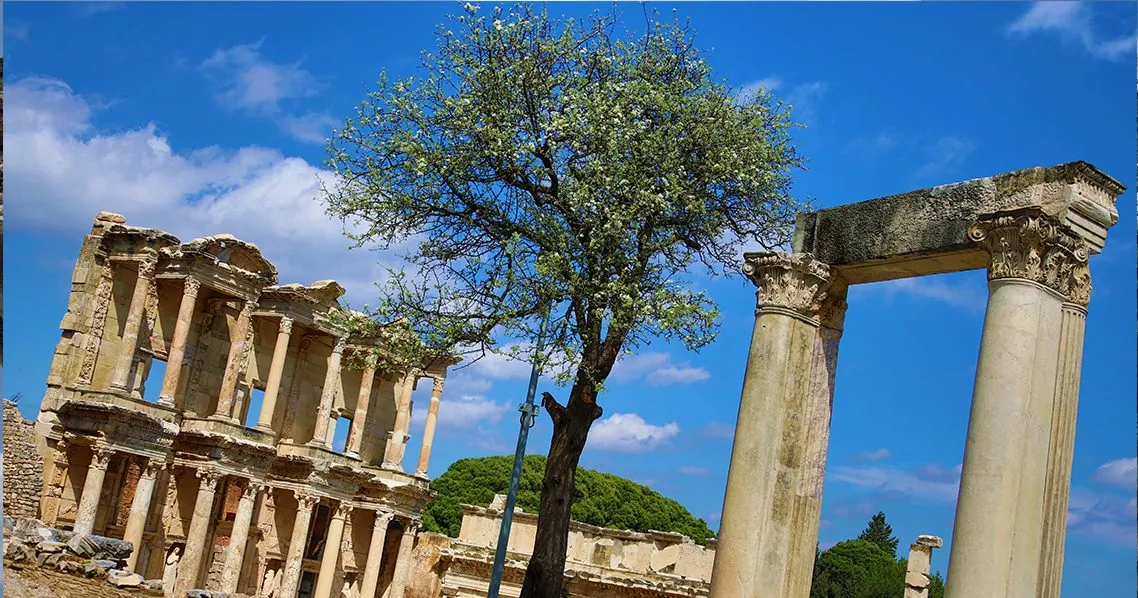
Search for Ephesus online or pick up a book about it, and the cover will most likely show the Library of Celsus.
The third-largest library of antiquity, the Library of Celsus still shines like a star today as the most magnificent monument of the ancient city of Ephesus.

HOW DID THE STORY OF THIS MAGNIFICENT BUILDING BEGIN?
Celsus Polemaeanus was a wealthy and powerful senator of the Roman Empire. Rising quickly through the ranks of politics, he became Governor of the Roman province of Asia and reached the height of his influence.
To immortalize his father’s name across the province of Asia, his son Tiberius Julius Aquila built the Library of Celsus in his honor in Ephesus, the capital of the province of Asia.
When Celsus died in 114, he was buried in the west wing of the library being built in his honor. Construction of the library was completed in 117.
The Library of Celsus is recorded as the third-largest library to survive from antiquity. It is the most prominent monument among the archaeological remains of ancient Ephesus.
12,000 HANDWRITTEN SCROLLS!
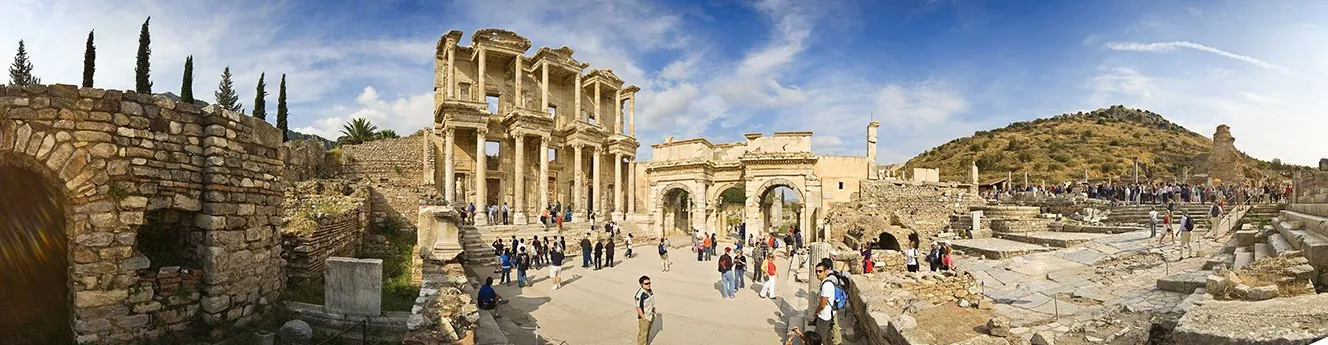
The library was built very close to the Agora, the heart of the city, on the main street of Ephesus known as Curetes Street. When it was first built, it held 12,000 handwritten parchment scrolls. To protect them from damp and heat, a gap of about one meter was left between the outer and inner walls.
IMPRESSIVE ARCHITECTURE
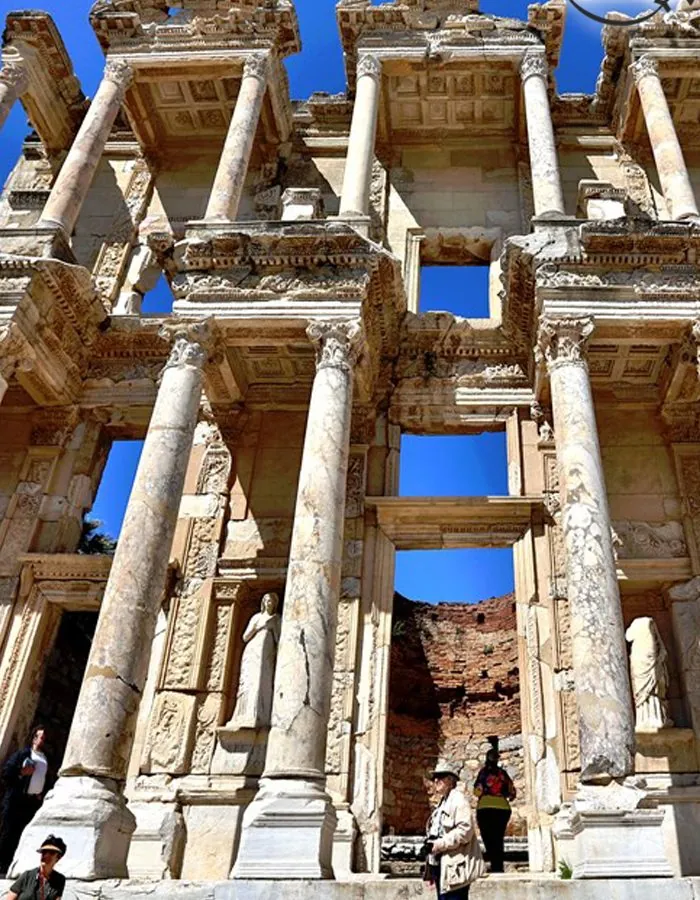
The façade, designed as the most striking part of the Library of Celsus, can still be clearly seen today. Superb works of art (statues) stand between its most powerful features, the enormous columns.
The four female statues set on pedestals between the columns are copies of rare examples of ancient sculpture; the originals are on display in the Ephesos Museum in Vienna. They represent values that antiquity held dear: Wisdom (Sophia), Knowledge (Episteme), Intelligence (Ennoia) and Virtue (Arete).