



ARTEMISION (TEMPLE OF ARTEMIS)
I have seen the mighty pyramids by the Nile and the colossal tomb of Mausolus. But when I saw the Temple of Artemis rising toward the clouds, I was left breathless!
And I said: "Apart from high Olympus, have the eyes of Helios ever looked upon anything to compare?"
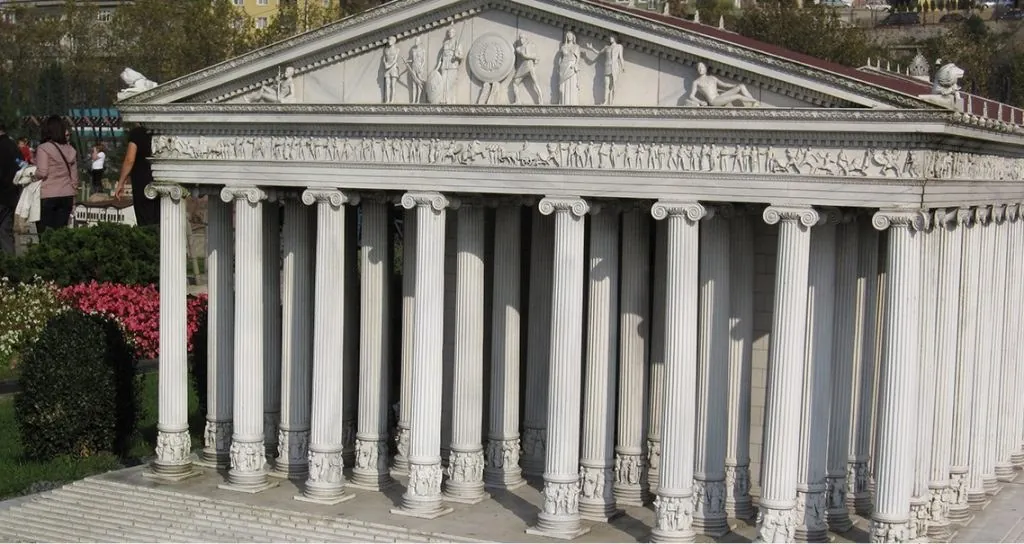
Renowned, as Antipater of Sidon said, for its legendary beauty and splendor, the Temple of Artemis was the first temple of the ancient world built of marble. It is also known as the “first monument” among the architectural works of antiquity. Financed by Croesus, the wealthy King of Lydia, for the goddess Artemis, the temple was designed by the leading architects of the day and adorned with bronze statues by the most famous sculptors. Its construction took 120 years, and the temple, measuring 130 x 68 meters, was burned down in 356 BC by a madman named Herostratus who wanted to immortalize his name. The temple was set on fire on the day Alexander the Great was born, and although Alexander offered the Ephesians help and money to rebuild it, they turned the offer down. After Alexander’s death, in 323 BC, they had the temple restored. Detailed information on the architecture of the temple, one of the Seven Wonders of the World, is recorded in Pliny’s (AD 23-79) Naturalis Historia.
Retaining its importance throughout the Hellenistic and Roman periods and welcoming visitors from every corner of the ancient world, the Temple of Artemis owned rich lands and also served as a bank. For this reason it was plundered and burned in AD 263 by the Goths, who came by sea; the real destruction, however, took place after the year 400, when its marble was used in Christian buildings.
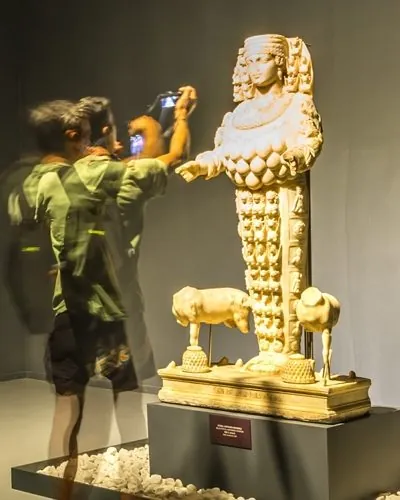
Artemis was the chief deity of Ephesus and played a major role in the city’s rise to fame. The traces of Eastern religious rituals she carried, her appeal to the people of Anatolia and the attributes of several deities she embodied explain the reverence she enjoyed in the ancient pagan world. Artemis of Ephesus is seen as a continuation of the Hittite Kubaba and the Phrygian Cybele.
Although it is not known how Cybele, the mother goddess of Anatolia, came to Ephesus and how her cult began there under the name of Artemis, it is accepted that Cybele went through various stages before becoming Artemis.
Unlike the Greek gods, and more like the deities of the Near East and Egypt, the goddess’s body is encased in a column-like sheath that tapers toward the legs, with her feet emerging from beneath it.
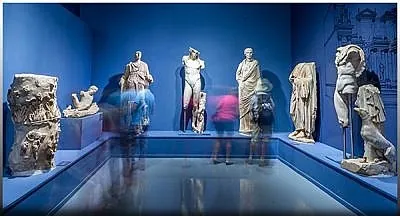
The temple was discovered by J.T. Wood in 1869. This was followed by excavations conducted by the British Museum in 1904/05 (D.G. Hogarth – A. Henderson) and, from 1965 onward, by the Austrian Archaeological Institute (ÖAI) under A. Bammer, which uncovered the courtyard altar and the earliest sacred building. The remains of the temple found in the excavations carried out for the British Museum by J.T. Wood in 1869-1874 and by David G. Hogarth in 1904-1905 were taken to England. According to tradition, some of the temple’s marble was later reused in buildings such as the Basilica of St. John and Hagia Sophia in Istanbul. With those finds now on display in the British Museum, all that is left on the site of the temple is a single re-erected column, on top of which storks build their nests. Sadly, this melancholy sight is all that remains of this magnificent building, plundered again and again over the course of history.