
SELÇUK EPHESUS CAMEL WRESTLING FESTIVAL
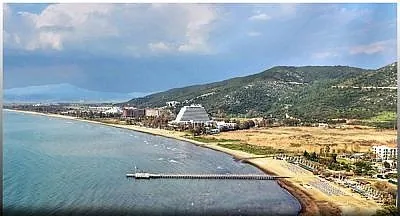
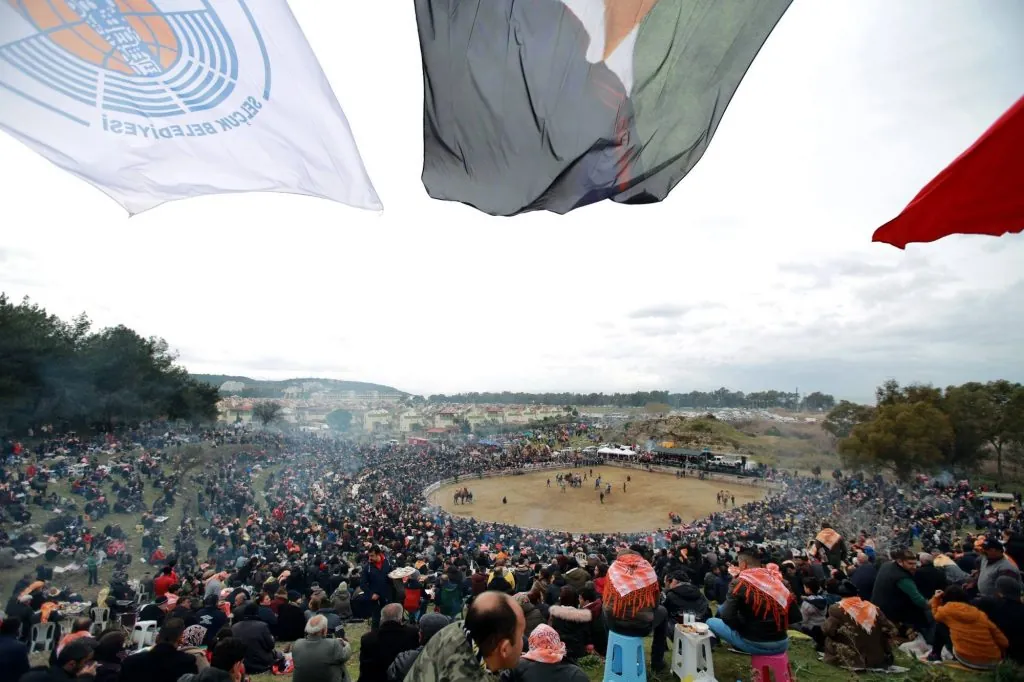
Every year on the third weekend of January, Selçuk hosts the Camel Wrestling Festival. Selçuk’s camel wrestling is one of the largest in the region. The arena near Pamucak is packed to overflowing throughout the bouts. Surrounded by fences, the arena feels like a fairground. The event has its own special costumes and accessories, such as flat caps, pleated boots and the poşu scarf. The cazgır (the announcer who calls the camels into the arena) summons them by their colorful names with rhymes and words of praise. Meals are eaten at tables set up along the fences, while sucuk sausages, meatballs and çöp şiş kebabs sizzle on the grills. Accompanied by drum and zurna, the festival also offers plenty of colorful moments for photography lovers.
Thanks to their strength, camels were indispensable to the people of Anatolia for carrying loads, and they are the main characters of a tradition that has survived to this day. Camel wrestling is a winter pastime and cultural event in the Aegean, Mediterranean and Marmara regions, and one of its most closely observed rules is preventing the animals from hurting each other. The camels come to no harm: if a bout turns dangerous, handlers called urgancı immediately separate the animals and lead them apart.
This tradition, born of the caravans that carried goods between İzmir and Aydın, is believed to have begun like this:
When the caravans stopped over in İncirliova, the camels, freed of their loads, would play with one another. These games caught the attention of the camel owners, and a rivalry of “my camel is stronger than yours” began. Over time it grew into a communal winter entertainment.
The wrestlers are male camels called tülü, bred by crossing single-humped female yoz camels with double-humped male camels known as buhur. These camels are raised solely for wrestling by camel keepers called savran. Just as with horses, wrestling camels are chosen by bloodline, and care is taken that future tülü wrestlers descend from wrestling camels. Bouts are held in four classes, ayak, orta, başaltı and baş, and victory is won by making the opponent flee, cry out or fall. As in other forms of wrestling, the camels are called pehlivan (champion wrestlers) and are announced by the cazgır. At the Selçuk Camel Wrestling Festival there is even a contest for the most beautiful camel among those decked out in colorful ornaments.
Since 2016, Selçuk Municipality has held the International Selçuk Ephesus Symposium on Camel Culture and Camel Wrestling at the same time as the bouts. Attended by universities and academics from Türkiye and abroad, with many papers presented on camel culture, the symposium is an important step in keeping this culture alive.
LIBERATION FESTIVITIES
Up to 9 September, many towns in the Aegean region celebrate the anniversary of their liberation. Every year Selçuk holds its Liberation Festivities around 8 September, the anniversary of the town’s liberation from enemy occupation.
You can shop at the handicraft stalls set up around town, sample local flavors and specialties over the several days of the festivities, and in the evening feed your soul with the concerts on the town square.
Organized by Selçuk Municipality, the festivities run for several days each year, until 10 September.
STORK AND WILDLIFE CULTURE FESTIVAL
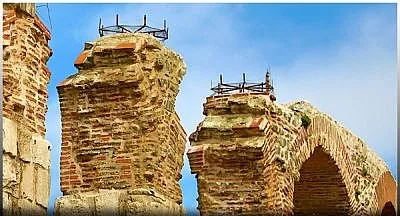
The stork is an important symbol of Selçuk… A symbol of the town for thousands of years, the storks greet visitors as if they were the town’s hosts. Arriving in Selçuk every year between late February and early March, they settle into their nests on top of the aqueducts at the most prominent spots in town, and they stay for a long time.
If you come to Selçuk’s Station Square at this time of year, you are sure to see people photographing the storks on the aqueduct. The town takes measures to keep its beloved symbol comfortable: restoration work is paused when the storks arrive, and their nests are maintained before they come. The first stork to arrive in town heralds the spring.
The storks winter in Africa; the first arrivals come in the last week of February and the rest follow in the first week of March. They stay until 25 August and then fly back to Africa for the winter.
Organized by Selçuk Municipality, the Stork and Wildlife Culture Festival was launched to raise awareness of wildlife culture. Storks are an indicator of healthy wildlife, and the Selçuk wetlands are their feeding grounds. Among the festival’s aims are protecting wildlife through the storks and contributing to the growth of a wildlife culture. Its main goals include becoming a sustainable environmental event and protecting the town’s natural life; for information about the festival, you can contact the Municipality’s Directorate of Culture and Selçuk Ephesus City Memory.
The festival is usually held in August.
FEAST OF THE VIRGIN MARY
The Virgin Mary, who came to Ephesus in the last years of her life with St. John, one of the twelve apostles, is believed to have died (been assumed into heaven) on 15 August. Sacred to Christians, the Feast of the Virgin Mary is celebrated with masses at the Church of the Virgin Mary in Ephesus and at the House of the Virgin Mary on Mount Bülbül.
Every year on 15 August, the day of the Virgin Mary’s death, the House of the Virgin Mary hosts a grand mass organized by the Vatican. Since Orthodox Christians also observe 15 August as a special day, masses are held in the churches of Selçuk and Şirince for the Feast of the Virgin Mary.
FEAST OF ST. JOHN
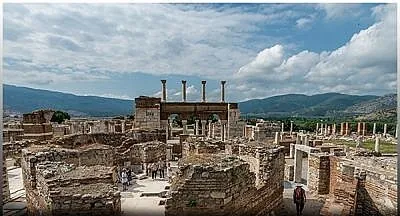
The church in the Ancient City of Ephesus is one of the seven churches named in the Bible, and two of Jesus’ apostles, St. Paul and St. John (Saint Jean), came to Ephesus and lived in the area for a time. John the Apostle, one of the 4 Gospel writers, spent his last years in Ephesus. St. John is also known as the only one of the 12 apostles to die of natural causes.
St. John’s tomb lies in the Basilica of St. John at Ayasuluk Castle. The feast commemorating St. John, the apostle to whom Jesus entrusted his mother Mary, is an important day for Christians. Since death is seen as a reunion with God, St. John’s death is also celebrated as a feast. Celebrated by the Orthodox in early May and by Catholics in late May, the feast is marked with masses and prayers. Services are held at the Basilica of St. John, the Church of the Virgin Mary in Ephesus and the Church of St. Demetrius in Şirince. Almost every year, the service held by Orthodox believers for the feast is led by Ecumenical Patriarch Bartholomew of Constantinople or a visiting patriarch.