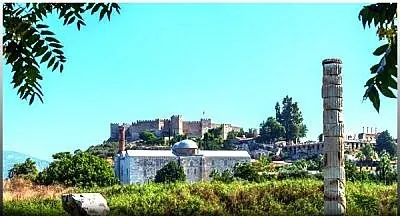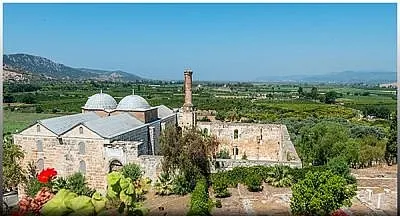


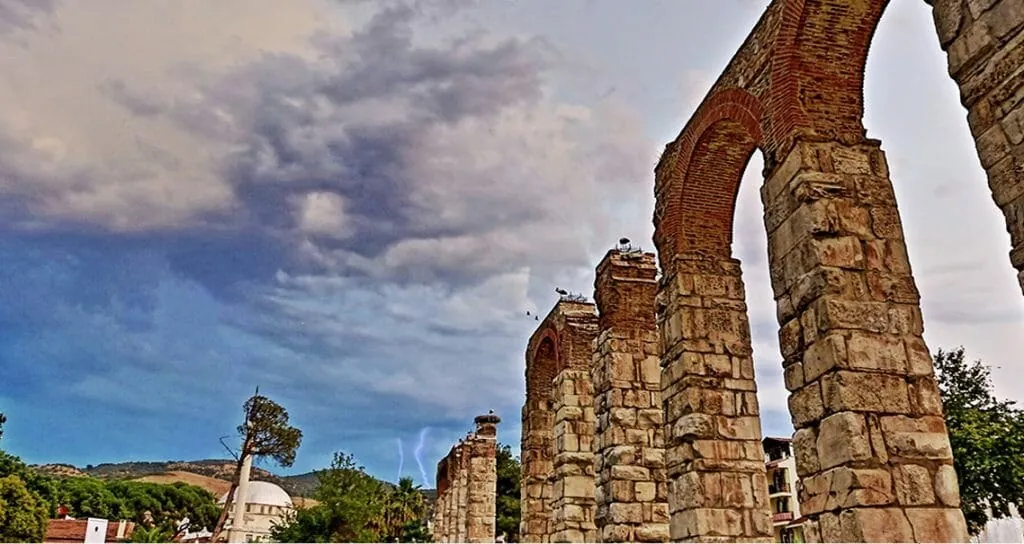
Starting east of the Gate of Persecution at St. John’s and surviving intact within the town, especially around the train station, the Byzantine aqueducts continue through the Şirince Gorge and then turn north.
They carried drinking water from springs east of the Pranga area, between Belevi and Selçuk, to the Byzantine settlement on Ayasuluk Hill in Selçuk and to the Church of St. John, a pilgrimage center of the Middle Ages.
Around the station the aqueducts still stand intact to a height of 15 meters; their piers were built with reused marble blocks brought from Ephesus and the Artemision and trimmed to fit. Among them, the Ionic capitals of the Archaic period are of particular importance (Ephesus Museum, Great Courtyard).
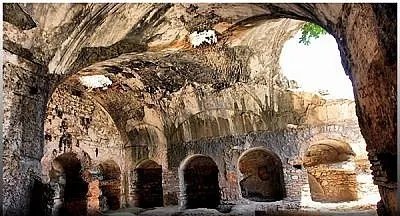
Brick was used for the upper arches. Where the aqueducts reach Ayasuluk Hill (east of the Gate of Persecution), a large water tank, or cistern, has been excavated and restored. This reservoir, with its arched and vaulted superstructure, also reuses fluted columns brought from Ephesus and Composite capitals from the mid-2nd century.