

THE MYSTERIOUS HOUSE OF THE VIRGIN MARY
Thanks to its rich history and nature, the land on which Selçuk stands has kept its allure for a very long time… The area around Mount Bülbül, which surrounds the site of the Ancient City of Ephesus, is also considered sacred, especially by the Christian world. With the great mass held here every year on 15 August, Mount Bülbül is of great importance to Christians as the home of the House of the Virgin Mary.

Most Christian historians hold that, while on the cross, Jesus entrusted his mother Mary to his friend and apostle St. John. After Jesus’ ascension into heaven, the apostle John felt it was unsafe for Mary, now in his care, to remain in Jerusalem. So he took Mary with him and came to Ephesus, where he also meant to spread the Christian faith. Keeping Mary hidden from the people of the city, he settled the Virgin in this house on Mount Bülbül. Accordingly, it is believed that the Virgin Mary spent her last days in this house.
The story of how the house was found is fascinating: in the 19th century, a German nun named Catherine Emmerich, who had never once been to Ephesus, fell gravely ill and, bedridden, began to speak again and again, in visions, of the House of the Virgin Mary. Her extraordinarily detailed accounts of people, places and events she could not possibly have known caught the attention of both the public and a number of intellectuals at the time. Clemens Brentano, a poet of the German Romantic movement, even moved close to Emmerich around 1818 as the nun’s “secretary” and, drawing on these descriptions, wrote the book ‘The Life of the Blessed Virgin Mary’. The book aroused tremendous interest among the public and in the press of the day. Many clergymen then organized expeditions to the area to find out whether the nun’s descriptions were true. It is said that during these expeditions a house matching Emmerich’s description was found on Mount Bülbül, 7 km from Ephesus.
Following all these descriptions of the House of the Virgin Mary, teams began excavating in the area and brought to light a building whose foundations are thought to date from the 1st century. Restored in the 1950s, the House of the Virgin Mary has been declared holy by the Vatican. Pilgrimages have been made here by Pope Paul VI in 1967, Pope John Paul II in 1979 and Pope Benedict XVI in 2006.
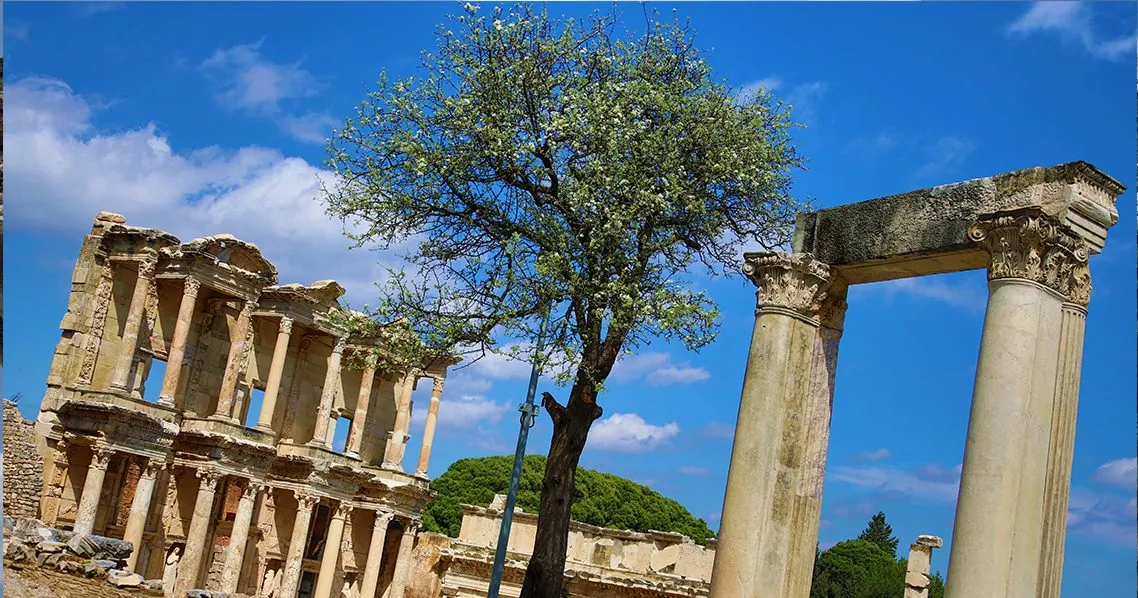
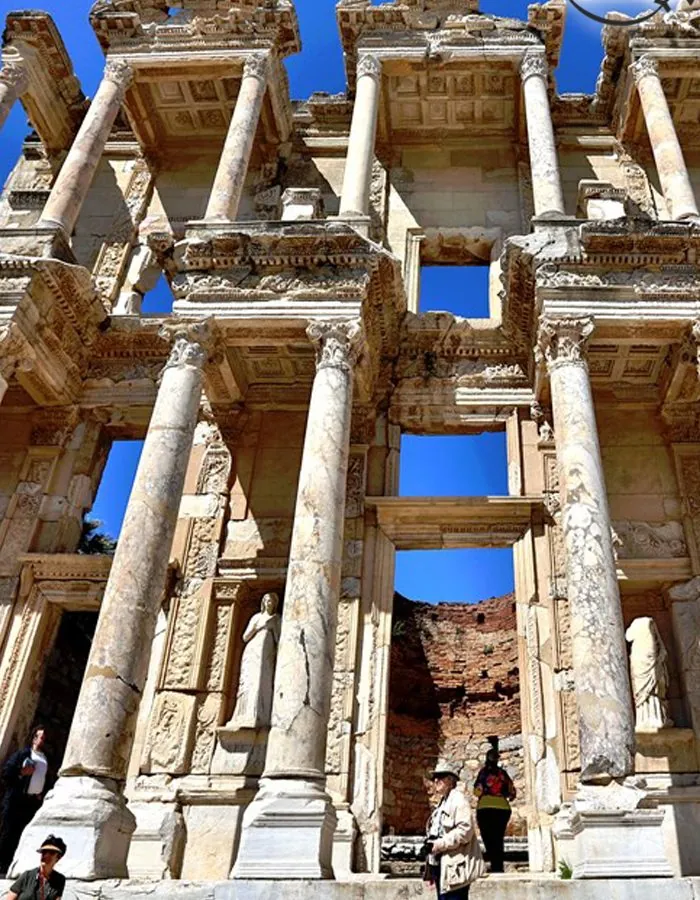
Ephesus ranks among the most famous cities of antiquity. Especially in the Roman Imperial period, Ephesus, the capital of the province of Asia, dazzled with one magnificent building after another and the sculpture that adorned them. There is no doubt that the main sources of the city’s wealth were its hinterland of fertile land opening onto inner Anatolia and its exceptionally well-placed harbor, facing the capital, Rome.
Perhaps because this geography mattered so much, one of the seven churches named in the Book of Revelation was in Ephesus. The Epistle to the Ephesians in the New Testament was written by the great churchman Saint Paul after his two visits to the city. That the name of Ephesus appears 12 times in the Bible, and that 5 passages are addressed to the Ephesians, says enough about its importance.
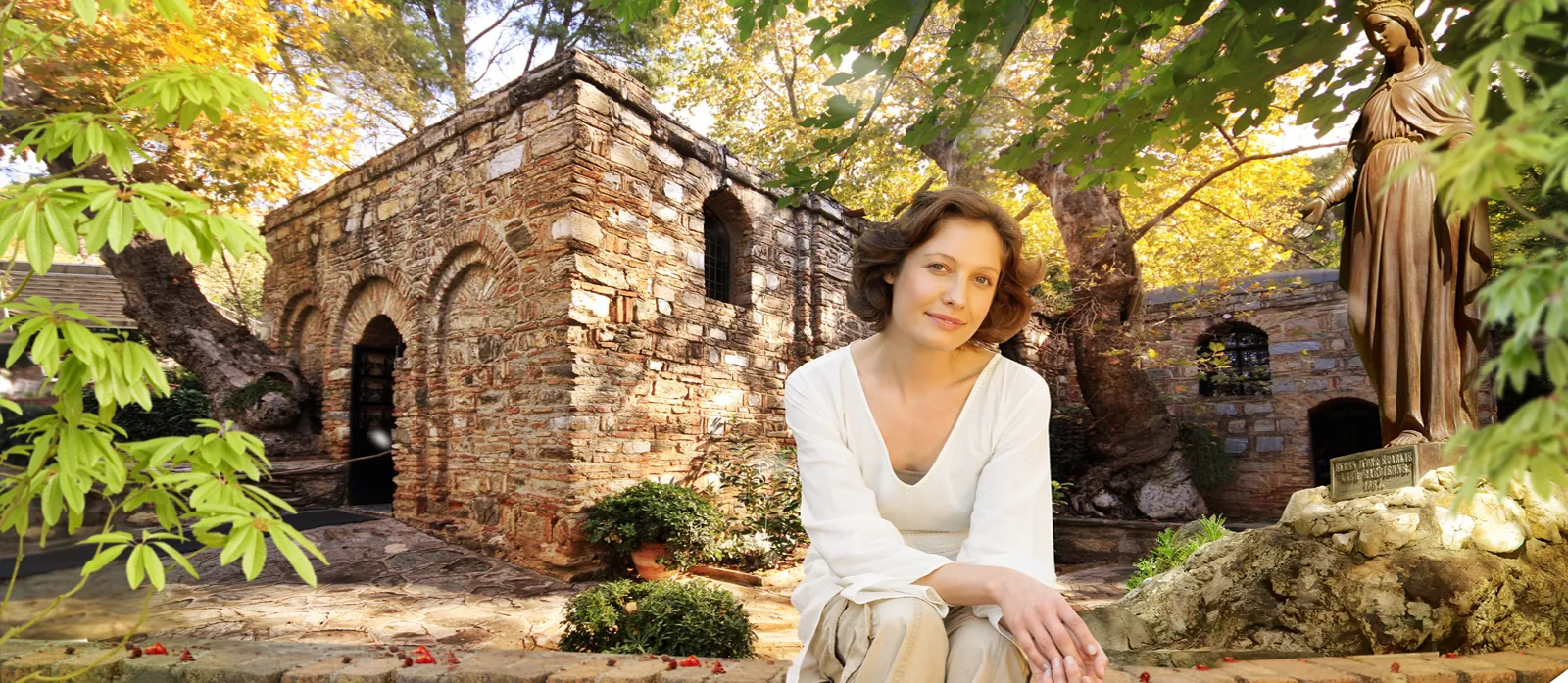
Besides the small building known as the House of the Virgin Mary, the site has a cistern, a holy spring and some enclosure walls. Although it is called a house, it is in fact a chapel with a cross-shaped plan. Its walls show features of the 6th–7th centuries or later. The House of the Virgin Mary, around which the oldest finds date to the 1st century AD, took its final form in the 13th century. Faithfully restored, it has become an important place of pilgrimage. Every year on 15 August it hosts a great mass.
SPRING WATER
A visit to the House of the Virgin Mary ends at three fountains, reached by the stairs on the right as you leave the chapel.
A small shop on the way down the stairs sells souvenirs. The House of the Virgin Mary, its grounds and this little shop belong to the Virgin Mary Association, founded by Muslims and Christians together. The association strives to meet the needs of the site with donations and the income from the shop.
The fountains run with drinkable water from the wells right beside the chapel. Believing the water has healing powers, visitors not only taste it but also take some home with them.
Source: meryemana.info