

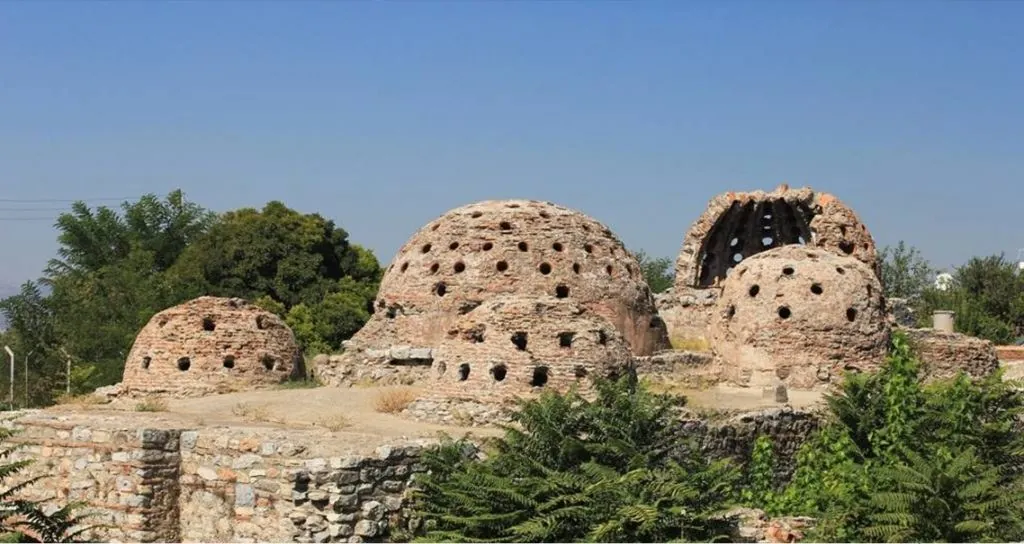
Built on the slope of Ayasuluk Hill, the hill on which the Church of St. John stands, the bathhouse dates from the same period as the İsa Bey Mosque; according to its inscription it was completed in 1364, a few years before the mosque (1375). Its marble inscription, now under protection, has a pointed arch. Arranged as a panel of five cartouches, the inscription is written in thuluth script. Partly illegible, the inscription reads, in translation: “The pride of religion, of the world and of the state, the great emir of the state, İsa Bey, son of Aydınoğlu Mehmed Bey (may God make his beginning and his end good), ordered the construction of this blessed bath in his time. The construction of this building, made by Hacı Hoca Ali son of Salih, the ornament of the Hajj and of the Two Holy Sanctuaries (may God make his end good), was completed in the month of Safar of the year 766 AH (may it bring blessings).” The inscription reveals that the building’s architect was Hoca Ali. Built on a square plan, the bath still has five of its domes standing, while the other three have collapsed.
- Home
- Things to Do
- Where to Stay
-
Ancient Sites
Ancient Sites
- Ancient City of Ephesus
- Ayasuluk Hill
- Çukuriçi Mound
- House of the Virgin Mary
- Temple of Artemis
- Basilica of St. John
- Library of Celsus
- Byzantine Aqueducts
- Ephesus Museum
- Seven Sleepers
- Pollio Aqueduct
- Saadet Hatun Bath
- İsa Bey Mosque
- İsa Bey Bath
- Şirince
- Selçuk Bird Sanctuary
- Keçi Castle
- Çetin Culture Village Museum
- Selçuk Ephesus City Memory
- Pamucak Beach
- Mulberry Road
- Cafe Carpouza
 Featured
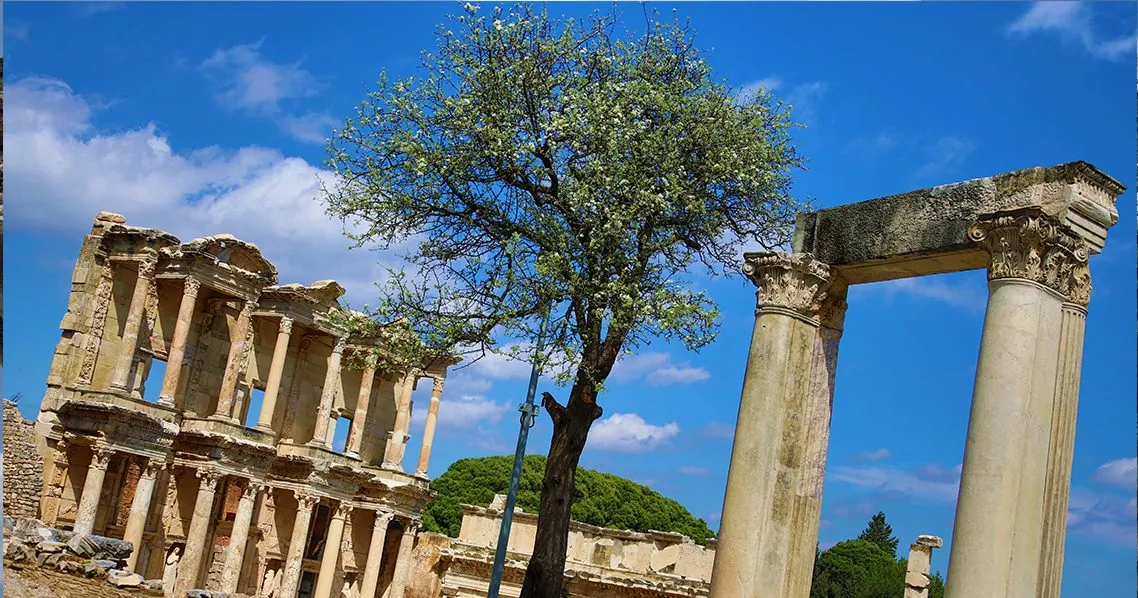
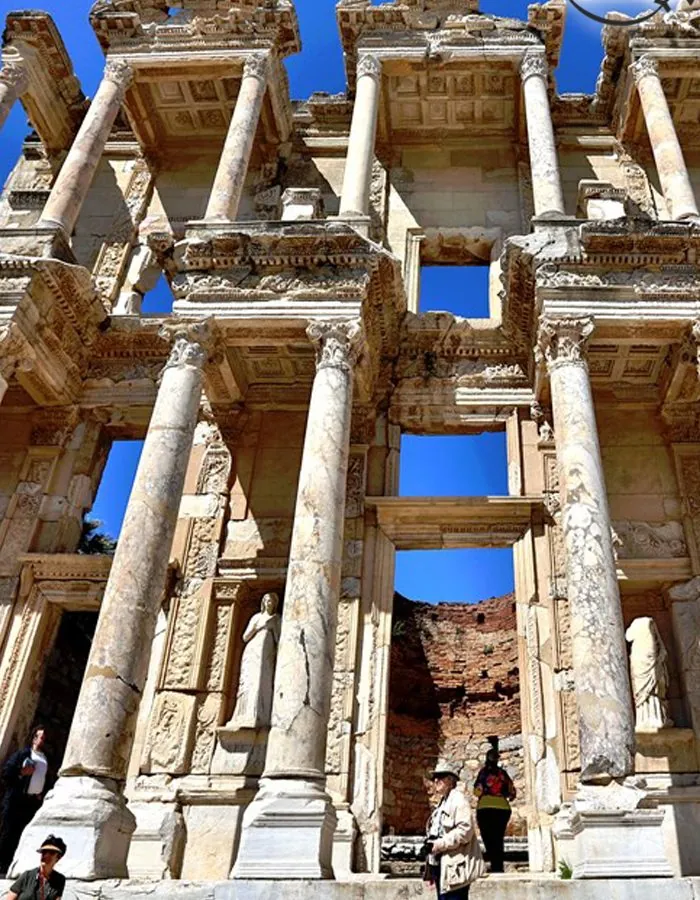
Library of Celsus
Home to 12,000 scrolls, one of the most magnificent libraries of the ancient world.
Discover
Featured
Library of Celsus
Home to 12,000 scrolls, one of the most magnificent libraries of the ancient world.
Discover
- Travel Info