
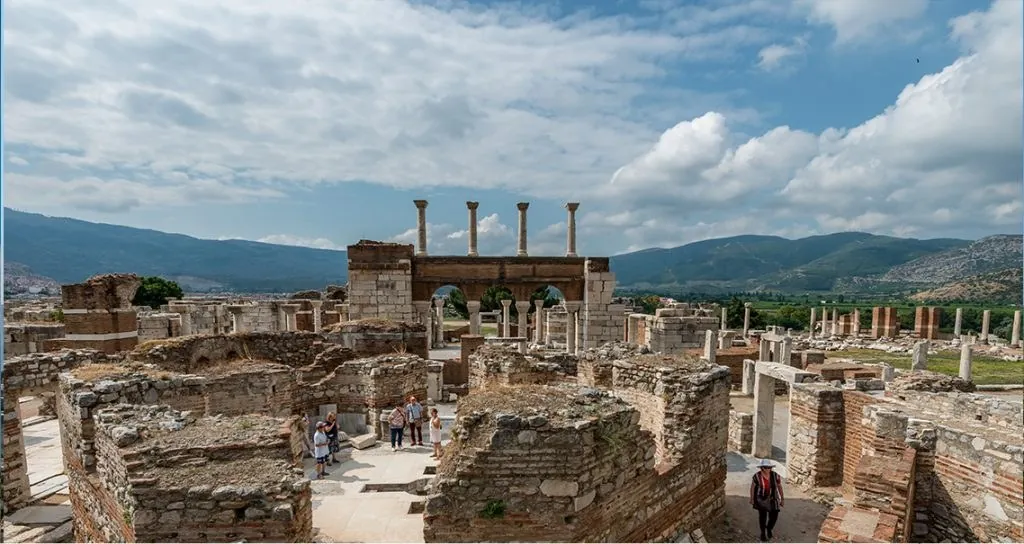
One of the twelve apostles, the most beloved and the youngest… St. John, also known as St. John Theologos, to whom Jesus on the cross entrusted his mother, lived here, wrote his Gospel here and even died here. Believed to have come to Ephesus around AD 37–38, St. John worked to spread the Christian faith there and brought new believers into his community. St. Paul also stayed in Ephesus for a while before leaving. St. John, who preached the Gospel together with St. Peter, was, according to tradition, twice the target of attempts on his life under Emperor Domitian, and miraculously survived both.
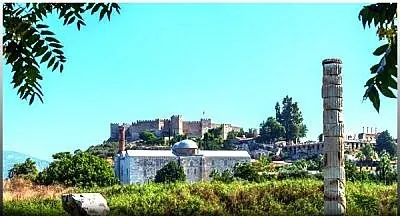
Exiled to the island of Patmos under Domitian around AD 95, St. John returned to Ephesus after the emperor’s death. Spending his final years in Ephesus (on Ayasuluk Hill), St. John wrote the Gospel that bears his name and his epistles here. He died here at the age of about 100 and, as he had wished, was buried on Ayasuluk Hill.
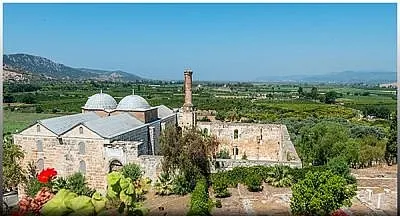
Around AD 300, as Christianity began to spread, a martyrion (memorial tomb) was built over his grave. About fifty years later (around 350) the memorial tomb was enclosed within a wooden-roofed basilica, but earthquakes in the early 6th century left it unusable. Between 527 and 565, Emperor Justinian and his wife Theodora had a new domed church with a cruciform plan built in place of this basilica. When the people of Ephesus moved entirely to Ayasuluk after the 7th century, the Church of St. John took the place of the old episcopal church of Ephesus and became recognized as a pilgrimage church.
Regarded ever since as a major pilgrimage center for the Orthodox community, the Church of St. John hosts services every year on 8 May (the saint’s feast day), held, in keeping with Christian belief, in the spiritual presence of St. John.