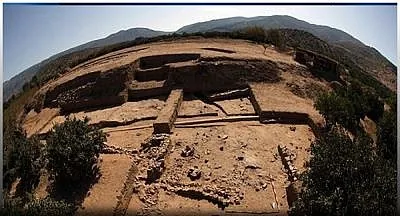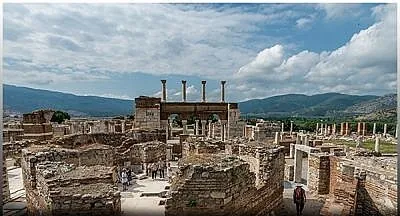




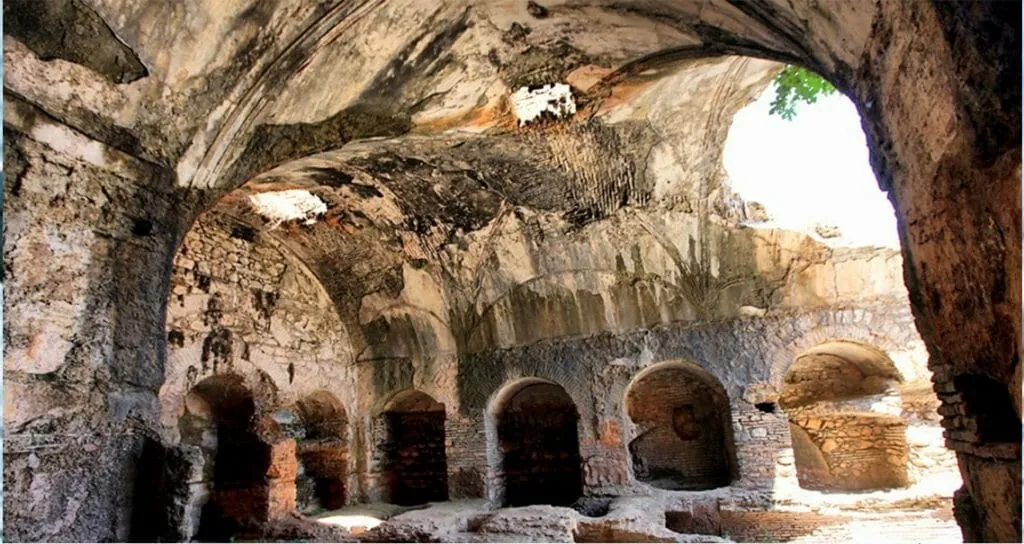
The cemetery built inside a natural cave at the foot of Mount Panayır, north of the Ancient City of Ephesus, is known as the Cave of the Seven Sleepers. The legend of Ashab al-Kahf (Companions of the Cave), or the Seven Sleepers, a subject of Christian religious literature, tells of six devout young men, a shepherd and their dog who, fleeing the pressures of paganism under Emperor Decius (AD 249–251), hid in a cave, slept there a deathlike sleep for 200 years and awoke in the reign of Emperor Theodosius II (AD 408–450). The young men were named Yemliha, Meklesine, Mislina, Mernoş, Tebernoş and Şazenoş; the shepherd was Kefesitetoş, and the dog with them was called Kıtmir.
Google MapsThis map is provided by Google. When it is shown, Google receives your IP address and may set cookies.Open in Google Maps · Cookie Policy