

A CORNER OF PARADISE: ŞİRİNCE
This is the village of which Greek writer Dido Sotiriou wrote in her novel Farewell Anatolia: “If there is such a thing as paradise on earth, our Kırkıca (Şirince) must have been a part of it.”
Sabahattin Ali, for his part, stayed here for four days in 1947 and described the village, which lived on in his memory as a ‘magic village’, in one of his stories.
Who wouldn’t want to see Şirince, the magical, heavenly corner that inspired these master writers to tell its stories?
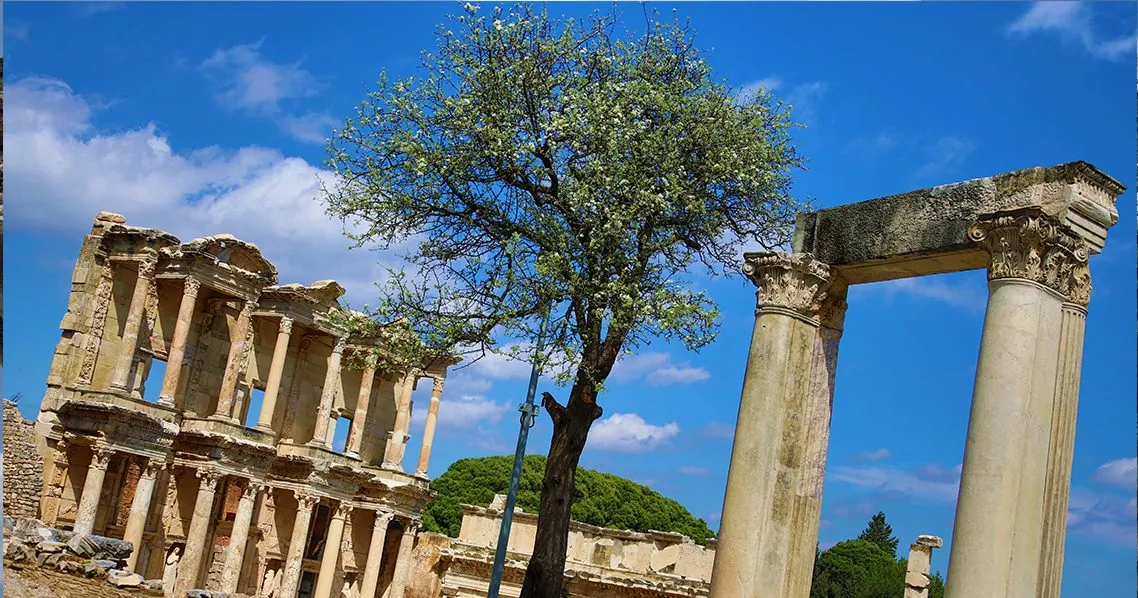
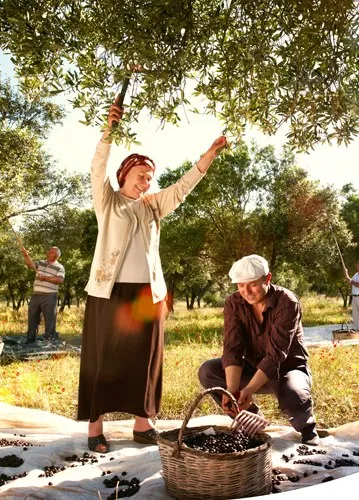
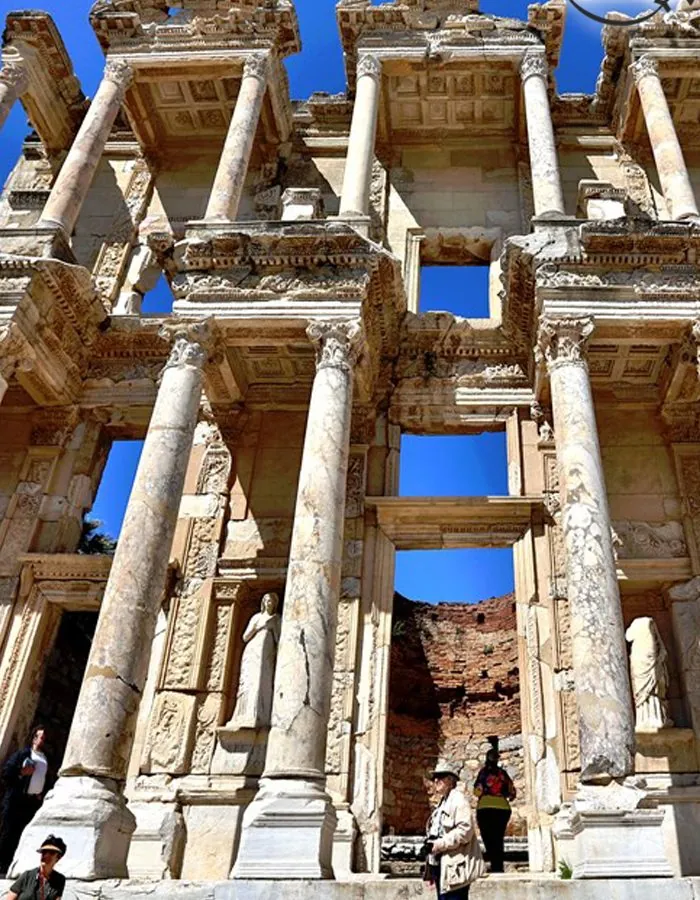
Once you have come to Selçuk and toured magnificent Ephesus and the mystical House of the Virgin Mary tucked away high on Mount Bülbül, you can take the turn-off heading east from Selçuk. Follow the signposts along a road that winds its way up through the greenery, and after 10 minutes you reach a corner of paradise with unrivaled natural beauty. The journey begins among the olive and tangerine trees lining the road to the village, and at the end of that winding, olive-fringed road you are greeted by old Greek houses and the delicious scent of wine grapes.
WELCOME TO ŞİRİNCE
Located 8 km east of Selçuk, Şirince was home to Orthodox Greeks until 1922 and is a population-exchange village. Apart from a few Turkish Muslim officials, the population was entirely Greek, which created a shared culture and set of traditions in those years. With its 19th-century houses, heavenly nature, clean air and vernacular architecture preserved from those years to the present day, the village can make you lose all sense of time if you are not careful, and draw you in with its captivating energy.
The fact that old sources refer to Şirince as “Ephesus on the Mountain” shows that the village has a long history. There are different stories about how it was founded.
According to one source, Şirince was founded in the Beylik period. A group of villagers working for a local lord asked to be freed and to be given the land of today’s ŞİRİNCE and its surroundings. The lord asked, “Is the place where you will settle beautiful?” The answer was, “It is çirkince (rather ugly).” So the lord said, “Then let your village be called Çirkince,” and the freed villagers founded Şirince.
In the 19th century, Şirince, or Çirkince as it was called before, was a village of 1,800 households under Ottoman rule, with a Greek population. Its official spoken language was Turkish. Paying taxes to the government and living by an order they had established among themselves, the villagers led a closed village life in this mountainous region.
Life, which had been fairly quiet until the 1910s, began to stir with agitation by migrants expelled from Greece. During the Balkan War the villagers at times resisted the Ottomans. When the calendar reached 1914, World War I made itself felt in Anatolia with all its force. The Ottoman government enlisted Şirince’s young men in special work units known as “Labor Battalions”. Those who fled the battalions resisted, either as guerrilla bands in the mountains or by taking refuge in Greece. When the armistice was signed in 1918, the surviving villagers of Kırkıca returned home.
On 15 May 1919, Greece landed troops in İzmir with the aim of occupation. When they entered Şirince (Kırkıca), they were welcomed with great enthusiasm. At the time, Kırkıca was under Ottoman sovereignty, but its people, regarding themselves as Greek, went to İzmir to enlist voluntarily in the Greek army. The volunteers gathered from Urla, Kokluca, Bornova and Kuşadası were placed under the command of Greek officers. The aim was to partition Anatolia together with the other Allies.
However, after the victory of the Great Offensive of 26–30 August 1922, which brought the War of Independence to a close, and the liberation of İzmir on 9 September 1922 that followed soon after, most of the Greek villagers who had lived in the area emigrated to Greece.
Kırkıca thus became a deserted village, apart from a few elderly residents. Finally, with the population exchange of 1924, people arriving from Greece (Thessaloniki, Provusta, Kavala and elsewhere) were settled here, and the village began to come back to life, gradually becoming what it is today.
In the early years of the Republic, Kazım Dirik Pasha, then Governor of İzmir, came to visit Çirkince. When the village teacher, Muallim Suat Bey, welcomed him with a “village anthem” he had written and composed himself, the governor was deeply moved and said that from then on the village should be called Şirince. Perhaps he felt that this lovely place was far too beautiful to be called Çirkince (“rather ugly”) and wanted it to be named for its beauty instead.
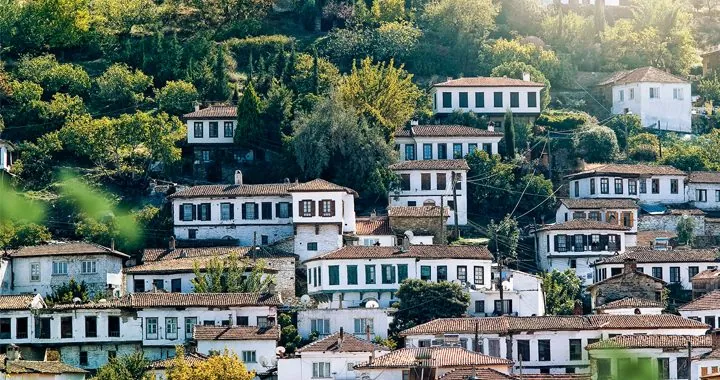
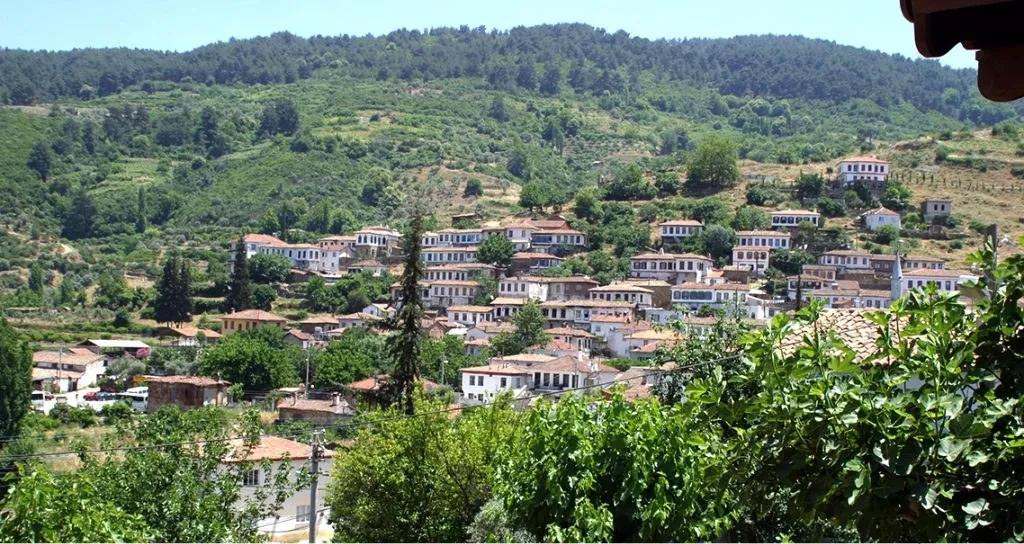
As you enter the village, the first thing that catches your eye is its historic architecture. Around 200 houses from the Greek period survive today. Because of the sloping terrain, the houses are lined up along the hillside, creating a neat, tiered look.
Besides the houses, the village’s bakeries, coffeehouses and fountains also stand out. The churches of Aya Yani (St. John) and Aya Dimitri (St. Demetrius), built in the 19th century, are just two of the village’s historic buildings. The village also has a primary school building, which is well placed for understanding Şirince’s topography, since the houses, gardens and mountains can all be easily seen from there.
It has to be said: the village has a market as charming as its name. Here you will find fruit wines you have never come across anywhere else, and you can’t leave without tasting Şirince’s famous fruit wines in one of its many wine houses. The market also has small stalls where villagers sell their own produce, and you can find just about anything there: handicrafts, soaps, olive oil, grape molasses, honey, jams, souvenirs and much more…
And when you get hungry while exploring, this lovely village offers plenty of choices. You can taste many seasonal dishes of Aegean and Cretan cuisine, from chicory (radika), sautéed wild greens and şevketi bostan to stuffed zucchini flowers and more than we could list here, treating your stomach just as you treat your eyes and lungs.
Not enough to just stroll, eat and drink here? You’re right. Once you come to Şirince, you’ll want to wake up here. The village has plenty of places to stay for that: old Greek mansions, guesthouses and boutique hotels. You can spend a few days at these hotels, which preserve the village’s character and offer you Anatolian hospitality, and meanwhile even head to Kayserkaya or visit the Nesin Mathematics Village.
And don’t forget: along with the olive oil, village bread and fruit wine, be sure to taste the peaches if you come in summer and the tangerines if you come in winter before you leave. On top of all that, don’t say goodbye to Şirince, a village as charming as its name, without sipping a leisurely coffee brewed in hot sand at the old coffeehouse overlooking the Village Square.