



CAN A SINGLE STONE CHANGE HISTORY?
One day, during an excavation by archaeologists at Çukuriçi Mound in Ephesus, a black figurine made of stone was brought to light. It was a simple figurine, just 2 centimeters long. But that two-centimeter black stone changed the entire history of western Anatolia. The amulet figurine unearthed by the archaeologists that day was a full 9,000 years old!
BECAUSE THIS STONE WAS VERY OLD. OLDER EVEN THAN THE KNOWN AGE OF EPHESUS!
The amulet figurine found by the archaeologists that day revealed that, contrary to what was known, life in the ancient city of Ephesus began not in the 6th millennium BC but in the 7th.
THE FIGURINE THAT TOOK THE HISTORY OF EPHESUS BACK ANOTHER THOUSAND YEARS IS A FEMALE FIGURE
Made of black stone from natural material and shaped by hand, the amulet figurine, believed to protect its wearer from dangerous outside forces and disease, was found to have exaggerated hips and breasts and a face incised without detail. The oldest artifact unearthed in the Golden City is a female figure… And this figure showed that settlement in the area goes back 9,000 years. The 2.1-centimeter pendant, with a hole through its center, took the history of Ephesus, the Golden City and capital of the Roman province of Asia, back another thousand years.
Whether by a twist of history or not, Ephesus has always been a city associated with women.
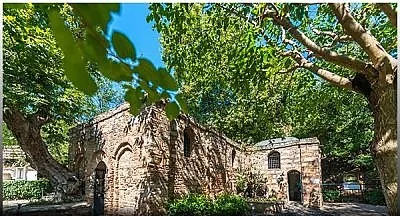
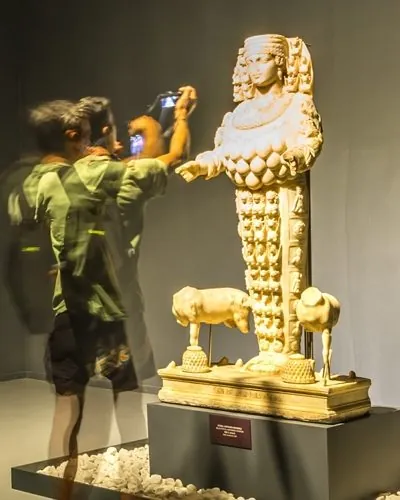
With this 9,000-year-old stone figurine, the Amazon women of its founding legends, the Artemis of Ephesus who carried on the cult of Cybele, the Mother Goddess of Anatolia, and finally the Virgin Mary, the city of Ephesus has carved its name into history as a city remembered for its powerful female figures. No one knows which Ephesian woman wore the figurine on her breast or what evils it warded off, but the excavation team has dated it to the Neolithic period. This figurine, which led to a reassessment of the entire settlement history of western Anatolia, is now on display in the “Ephesus Through the Ages” hall of the Ephesus Museum.